F-Audio
Menu

OEM / ODM

Smart glasses OEM/ODM manufacturing for your brand

Start with an existing model, customise its app and interactions, or develop new hardware. We agree the specification, engineering work and delivery responsibilities for your project.

Three ways to work with us

Choose the amount of product development your market needs. The scope and quotation depend on the selected model and deliverables.

Branding

An existing model, your brand

Start with an existing specification and model. Define your logo, packaging and, on supported configurations, a custom offline wake word. Confirm the exact supported functions and sample before production.

Fits when: You want an existing product adapted for your brand and channel.

App & firmware

An existing model, your experience

Combine branding and supported wake-word changes with a custom app based on the relevant reference App SDK and limited firmware changes. Camera and audio SDKs are separate; supported interfaces and mobile platforms must be reviewed before development.

Fits when: Your app, workflow or AI service is central to the product.

New development

From brief to a new product

Develop industrial design, 3D mechanical structure, firmware and app on an existing or new hardware platform. Engineering/NRE, moulds, validation, certification and IP deliverables are scoped and agreed for the project before work starts.

Fits when: You need a new hardware design or a substantial change in product behaviour.

Not sure which applies? We wrote up how to decide, including the cases where starting on a platform and going custom in generation two beats picking one now.

MOQ, samples and engineering terms

Production: 1,000 units

The standard mass-production MOQ is 1,000 units. Below that, supply, unit price and lead time require confirmation. Sample requests are handled separately.

Request a sample quotation →

SDK and software scope

App SDK access and device firmware development are different deliverables. Firmware source is generally not released. Supported commands, phones and version maintenance are agreed per project.

Review integration requirements →

Engineering and ownership

OEM, ODM and joint development can be supported. NRE, moulds, licences, certification and IP delivery are specified in the project agreement. No standard price or blanket ownership promise is implied.

How a project runs

  1. 01

    Tell us the target

    Feature list, target retail price, market and quantity. A sketch or a competitor link is enough to start.

  2. 02

    Platform recommendation

    We come back with the closest platform, what it does out of the box, and what has to change.

  3. 03

    Sample and tooling

    Golden sample first. Frame tooling and colourway matching run in parallel once the sample is signed off.

  4. 04

    Certification

    CE, FCC, RoHS and market-specific testing arranged with our lab, issued in your entity's name.

  5. 05

    Production

    SMT, assembly, ageing and QC in one facility. Packaging, manuals and firmware branded to you.

What you can change

Frame
Your own front, your own colourway, your own hinge and temple profile.
Branding
Laser-marked logo, custom packaging, printed manuals, branded charging case.
Firmware
Supported configuration changes, Bluetooth pairing name and project-specific wake words or commands.
App
Reference SDK evaluation and scoped app customisation; camera and audio use separate SDKs.

Platforms in production

Explore additional frame and application directions for OEM/ODM projects. Confirm the selected configuration, sample readiness and development scope before production.

Open-ear audio glasses

Open-ear audio glasses

Bluetooth audio frames in classic, half-rim and sport shapes. Jieli platforms, ENC call pickup, TR90 or acetate fronts.

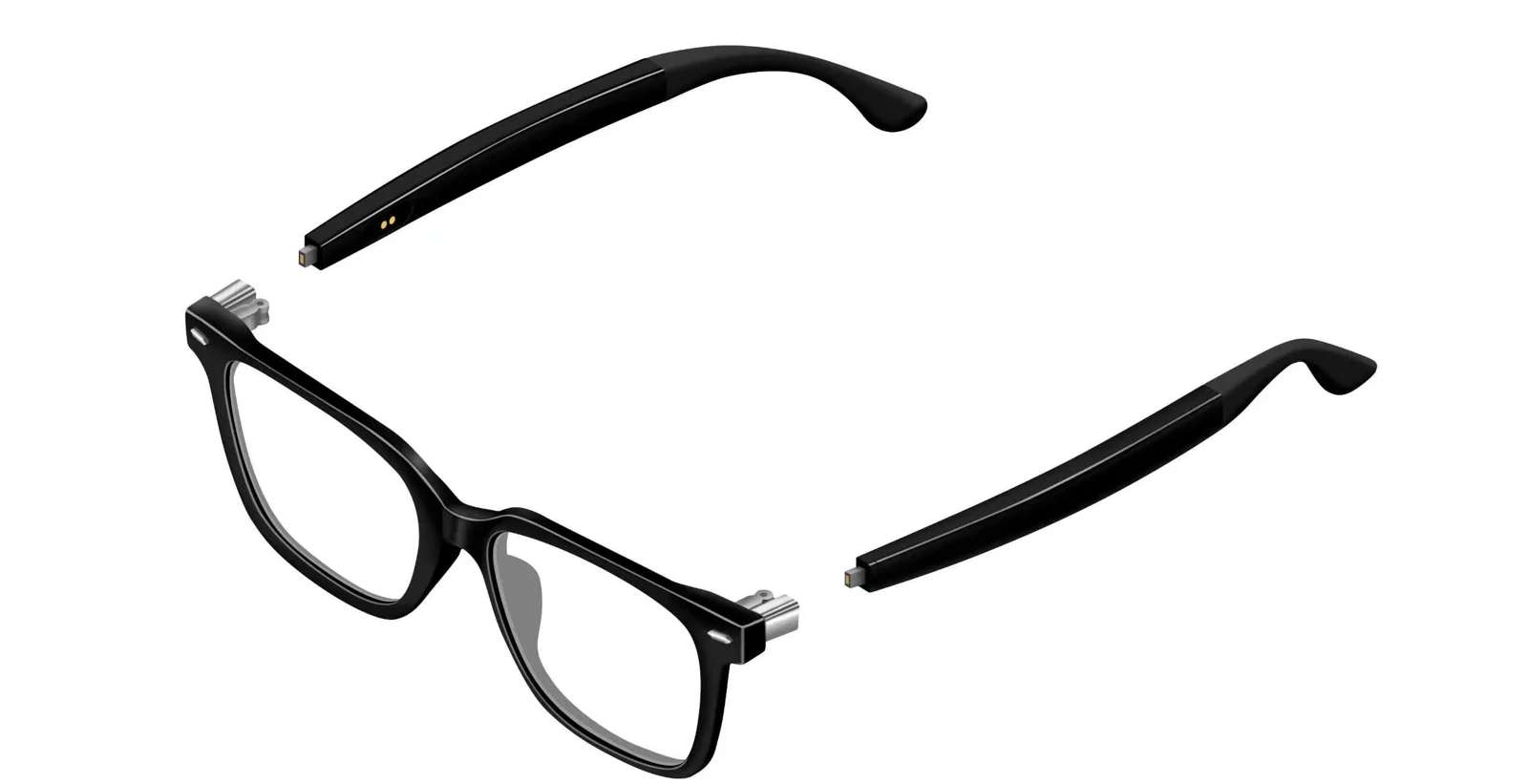
Verse Lite detachable audio temples

Verse Lite detachable audio temples

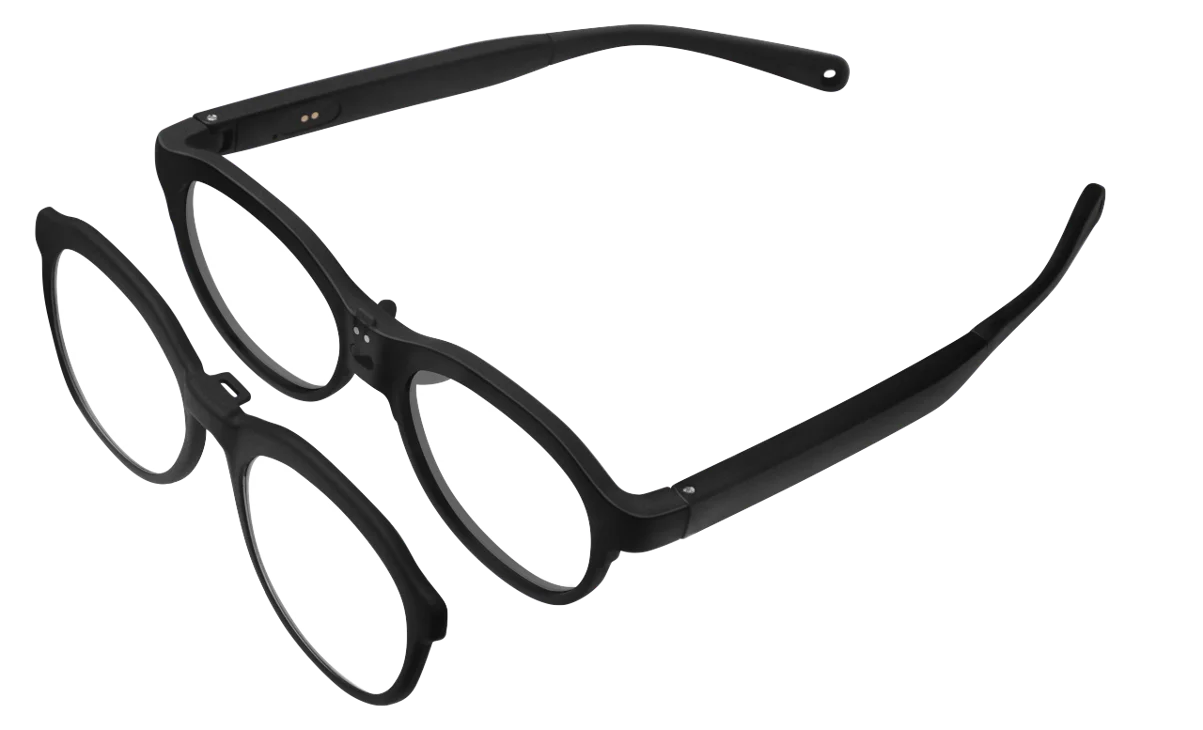
Removable audio modules pair with compatible front frames, allowing different wearing styles and private-label frame choices. Confirm the connection and fit for each frame.

Sport and cycling frames

Sport and cycling frames

Wrap fronts, interchangeable lenses and a higher IP rating for riding and running.

Children's reading-habit smart glasses

Children's reading-habit smart glasses

Posture and reading-distance prompts with visualised eye-use data. The reference design temporarily fogs the lenses as a posture cue; app features and reporting are scoped for your OEM/ODM configuration.

Waveguide AR display glasses

Waveguide AR display glasses

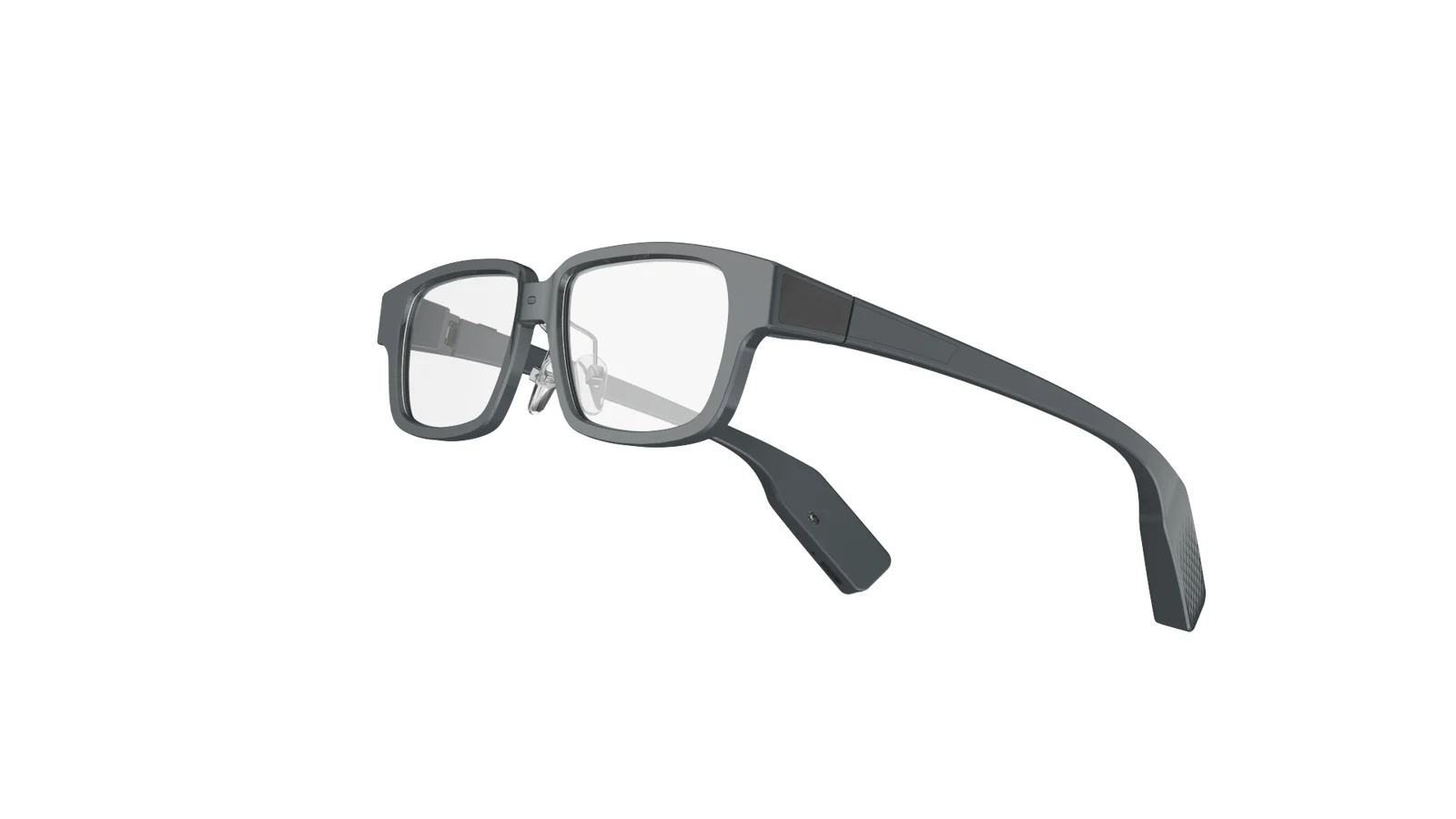
Explore Cue One and Cue Air for app-connected text, prompts and notifications. Confirm display interfaces and app support for the selected model; these display-only models have no built-in camera.

Assistive glasses for low vision

Assistive glasses for low vision

Scene recognition and spoken navigation aimed at accessibility programmes.

Translation ear-clip headphones

Translation ear-clip headphones

Open ear-clip form factor with the same translation stack as the Verse line.

Memo AI voice recorders (FA-R10 series)

Capsule, card, pen and power-bank bodies with transcription and speaker separation. Tooling exists; product photography is not yet shot.

Ask for details →

More platforms available — contact us for the full catalog — get in touch.

Children's posture prompts and eye-use data

A reading-habit platform for OEM/ODM evaluation. Separate the sensor-and-lens behaviour from app reporting and health-effect claims.

Illustrative reading scene for children's reading-habit smart glasses
Supplied application illustration; not a product test or clinical result.

Reading-distance and posture cues

In the described reference design, the lenses temporarily fog when the viewing distance is below 30 cm or head tilt exceeds 30 degrees. They return to clear when posture returns to the intended range. Confirm sensor calibration, trigger settings and lens behaviour on the selected sample.

Visualised eye-use monitoring

The proposed app workflow covers wearing or eye-use duration, ambient light, close-range or head-down use, outdoor activity and posture habits. Agree how each metric is detected, calculated and presented; wearing time is not automatically the same as reading time.

AI-assisted habit analysis

Scope the app's trend analysis and parent-facing reports with the selected hardware and data service. Confirm software availability, permissions, data handling and the functions actually delivered before launch.

Habit prompts and monitoring do not establish that this product prevents myopia, slows its progression or guarantees a habit change in 21 days. Any health-effect claim requires evidence for the final product and appropriate market review.

Discuss a reading-habit OEM/ODM project →

Start from a listed product

Memo AI recording cards

Card-format recording is part of our Memo AI voice-recorder range, alongside capsule, pen and power-bank formats. Review transcription, speaker separation, storage, app services, supported languages and sample configuration with our team.

Request the recording-card product brief

AI translation earphones

Open-ear translation earphones are available as an adjacent AI audio product direction. Confirm the exact hardware, companion app, language pairs, online/offline behaviour and subscription configuration for your project.

Request translation earphone details

Questions before you start a project

Can we start with a small pilot batch before mass production?

Evaluation samples, pilot builds and mass production are separate stages. The standard mass-production MOQ is 1,000 units. A smaller pilot, such as 100–300 units, is reviewed for the selected platform, available components, engineering work, unit price and lead time. Discussing a pilot quantity does not confirm supply. Validate the sample and agree the pilot quotation before committing to production.

How can we reduce the cost of a smart glasses proof of concept?

Start by evaluating an existing platform, firmware and companion app against the essential workflow. Separate platform evaluation from custom structure, electronics and software work. Agree functional prototypes, revision rounds and acceptance tests first; production tooling and certification are scoped separately. The quotation should distinguish engineering/NRE, prototype fabrication, optional development, shipping and later production costs.

Does a protective lens make the complete smart glasses certified safety eyewear?

Protective-lens documentation alone does not establish compliance of the complete smart glasses. The frame, lenses and integrated electronics must be assessed together for the intended use and target-market requirements. Define the required protection and standard with a qualified test laboratory before treating a configuration as certified safety eyewear. Standard camera/audio product certification does not establish protective-eyewear compliance.

Send us a spec.

Even a rough one. We will tell you what it costs, what it takes, and what we would change.

Start an enquiry
WhatsApp